Newry Flour Mills
Fireman James Fegan
Clanrye Mills
Corn and Flour Milling in Newry
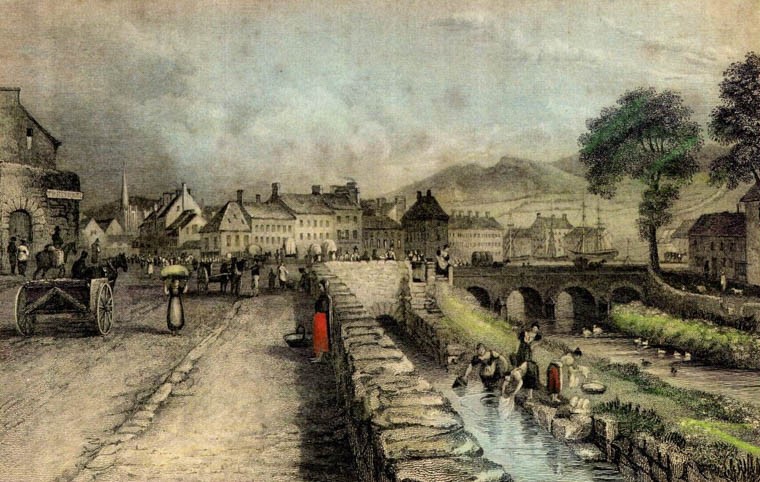
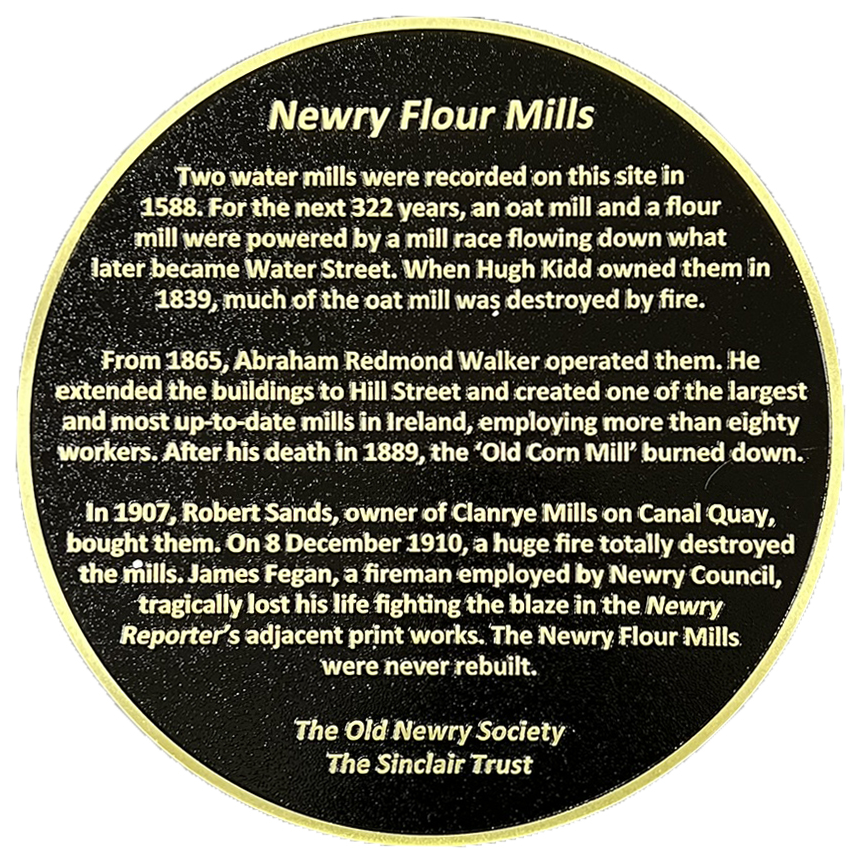
The earliest record of a mill in Newry was at the formal suppression of the Cistercian Abbey of Newry in 1548. On 20 June 1588, Sir Nicholas and his son Sir Henry Bagenal, who had acquired all of the powers and privileges of the Lord Abbot, granted Patrick Crilly of Newry land, two water mills with the water courses etc., and two weirs in the river Clanrye near the town. He was to pay Bagenal a ‘chiefrie’ of £3 6s. 8d. per annum for this property, which was in the townland of ‘Cornelough’ (Carneyhough).
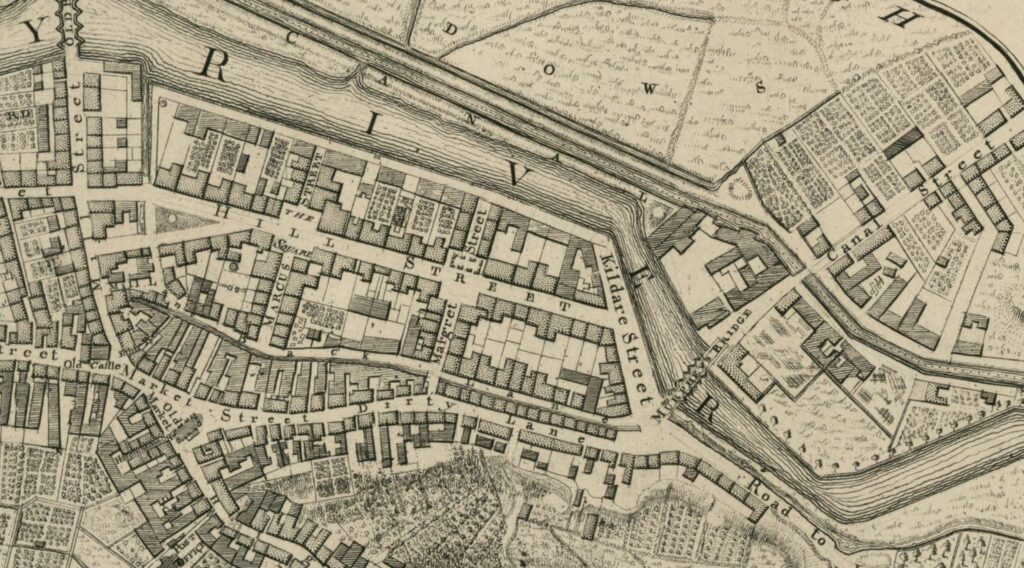
Newry was seriously damaged in 1641 and 1689, but it is likely the Needham family, then the landowners, quickly rebuilt the mills – one for oats and one for flour. In 1700, Mill Street only had six or seven slated houses. Wren’s map of 1761 shows the source of the mill race near the weir on the river, passing under Murphy’s Bridge and continuing down Back Lane. Rocque’s 1760 map shows it disappearing under the mill, reappearing beside O’Hagan Street and rejoining the river at its western end.
During the eighteenth century, the mills would have been leased by a succession of millers and in 1799 it was being operated by John or William Stewart. The following year, the Newry Flour Mill Company took Henry Langton into partnership and was to trade as Henry Langton & Co. In 1823, Stewart was bankrupt and the ‘Water Corn Mill, new Flour Mill, House formerly occupied by Joseph Wright, Corn Kiln, cabins, in Mill Street’ were put up for auction at a rental of £190 per year (about £22,000 today).
James Kennedy & Co were operating the mills in 1829, but by 1836 Hugh Kidd had taken them over. The following year the flour mill was consuming 900 tons of wheat annually and the oat mill was grinding 17,000 barrels of grain per year for the Liverpool and Manchester markets. By then, the oat mill was driven by steam and the flour mill by water. In 1839, much of the oat mill was destroyed by fire. Kidd died in a railway accident at Dunmurry on his way back from Belfast in 1841, and his sons took over the business. They also ran the Newry Mills Bakery in Mill Street and opened branches in Belfast and Armagh in 1846.
The Kidd Brothers were trading as ‘corn, meal, flour merchants, millers and bakers’ in 1852, but the mills were vacant from 1859 until 1861 when ‘Sinclair & Walker’ leased them. Their partnership ended in 1865 and Abraham Redmond Walker took over the Newry Flour Mills. By 1871 he was also operating the Millvale flour mills in the townland of Cloghreagh just outside Newry and the flour steam mills in Warrenpoint. At the Newry Flour Mills he employed about 80 workers, producing 60,000 bags of flour annually and importing 8,000 tons of Indian corn.
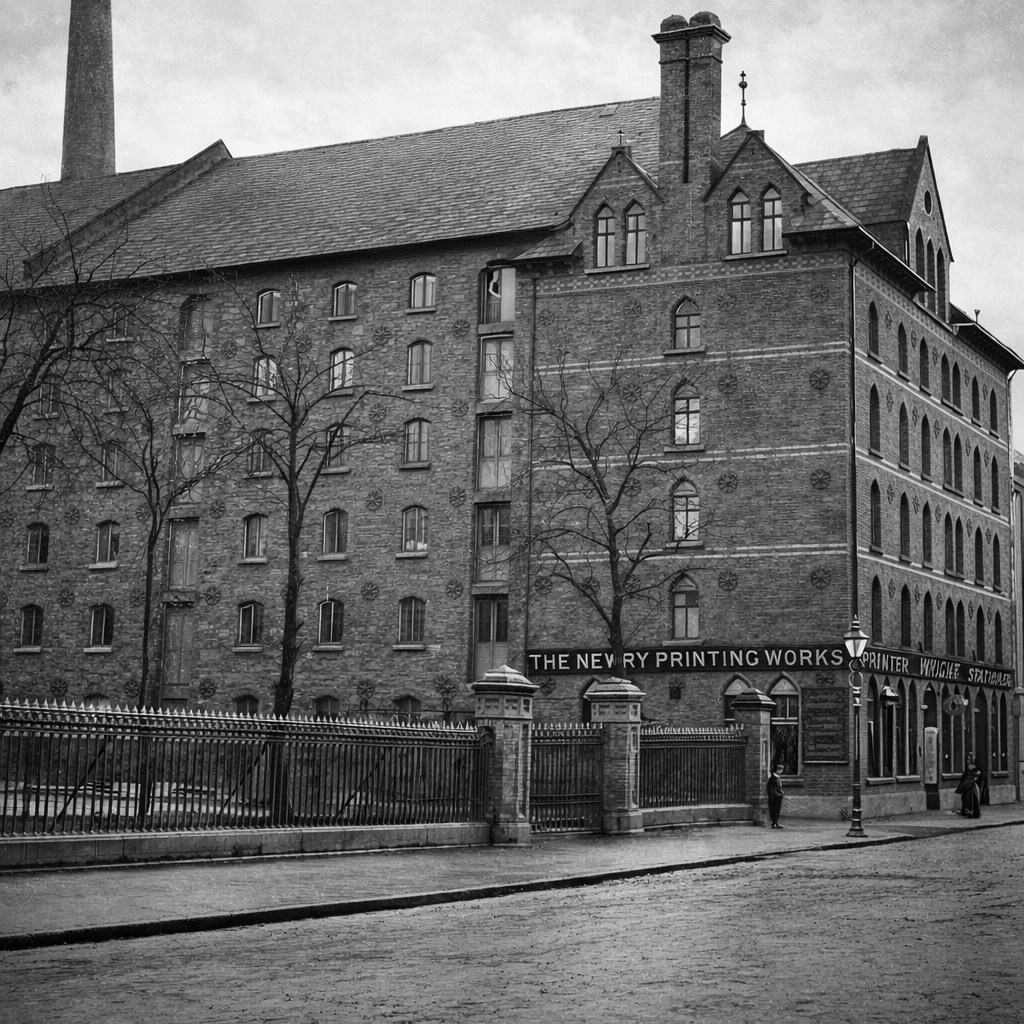
In 1879, Walker extended the mills by building new stores and offices to face Hill Street. A passageway between the mills and the new building was known as ‘The Step Entry’ and the streets it accessed behind the Cathedral were known as ‘The Back of the Dam’, where water entering the mills could be controlled. After improving the mills by installing rollers, the mills regularly employed 145 workers in 1883 and consumed 20,000 tons of grain and 30,000 tons of Indian corn annually.
Walker died in 1889 and the mills were put up for auction. Surprisingly, his widow Mary Walker purchased them for £4,000. The following year, the ‘Old Corn Mill’ was destroyed by fire, but Walker’s sons quickly brought the flour mill back into operation. In 1900, John Walker Redmond, Abraham’s nephew, was the manager and much of the roller milling plant and machinery were sold. Fire destroyed part of the mills in 1901 and again in 1902, when machinery was damaged and several hundred tons of pollard, bran and oats were lost, principally from water.
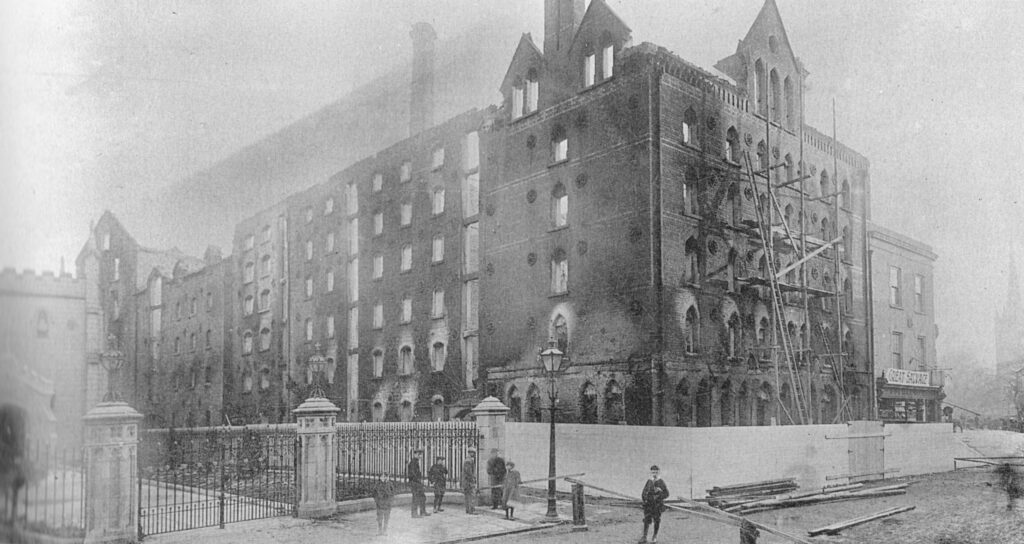
In 1907, Robert Sands, the owner of Clanrye Mills at Canal Quay, purchased Newry Flour Mills, but on 8 December 1910, a devastating fire completely destroyed them and the printing works of the Newry Reporter, which occupied part of the building facing Hill Street. At one stage during the fire it was thought that even the Cathedral was in danger of catching fire. The most serious consequence was the death of Fireman James Fegan, who was last seen fighting the fire at the rear of the Newry Reporter’s printing works. His calcined bones were later discovered and buried in St Patrick’s Churchyard.
All that was left of the mills after the fire were the walls and its 120-foot chimney. Sands relocated the Newry Reporter to Clanrye Mills, but the mills were never rebuilt. They had been working on this site for 388 years. Shops and offices now face Hill Street and Mill Street, and much of the site has become the Cathedral Garden.
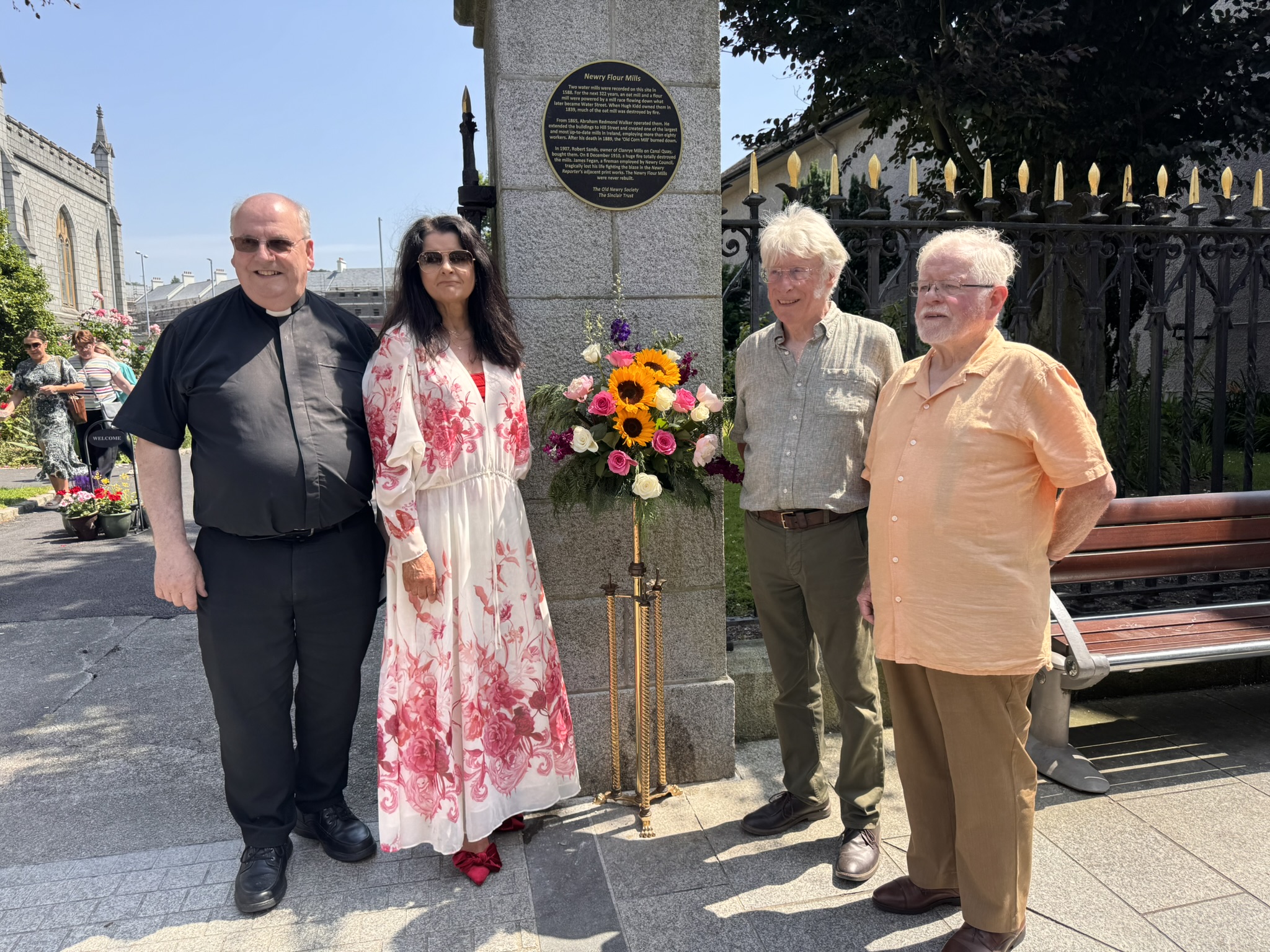
The unveiling of the Newry Flour Mills plaque attached to a granite pier at the entrance of the Cathedral Garden, Hill Street, Newry, on 25 June 2026. Attending were Canon Francis Brown and Siobhan Burns (Newry Cathedral Parish), Peter Sinclair (The Sinclair Trust) and Tom Moore (The Old Newry Society).